Call for a Free Consultation
919.444.4177
Call for a Free Consultation
919.444.4177A traumatic brain injury can change how a person thinks, communicates, and functions — often for the rest of their life, even when the injury never required surgery. If you are pursuing a traumatic brain injury claim in North Carolina, understanding how to prove and value these cases can make a real difference in what you recover. At Naomi Ellis Law, we help North Carolinians build serious injury claims that account for the full, lasting impact of a brain injury.
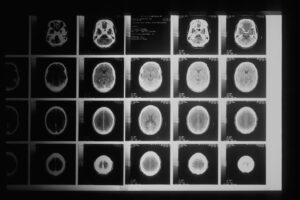 Motor vehicle crashes are one of the leading causes of traumatic brain injury hospitalizations in the United States, particularly for people between the ages of 15 and 44, according to the Centers for Disease Control and Prevention. A TBI does not require a direct blow to the head. The sudden deceleration of a crash can cause the brain to strike the inside of the skull, even when nothing ever touches the head directly.
People and doctors often miss TBIs in the hours after a wreck. Adrenaline can mask early symptoms, and a person may walk away from a crash believing they are uninjured, only to develop headaches, memory problems, or mood changes days later.
Doctors generally classify TBIs based on loss of consciousness, memory loss, and imaging findings.
The label “mild” is misleading. A concussion can still cause lasting cognitive and emotional effects, even when it never shows up on a scan.
North Carolina law draws a distinction between injuries that are objective — visible or measurable, like a fracture or a bleed on a CT scan — and injuries that are subjective, meaning they rely on the patient’s reported symptoms.
North Carolina courts often treat a concussion with normal imaging as a subjective injury for this purpose. That means a neurologist, neuropsychologist, or treating physician typically needs to testify that your symptoms are consistent with a TBI and are likely to persist. A jury generally cannot infer permanency from your description of headaches or memory loss alone.
This is one of the most overlooked pieces of a traumatic brain injury claim. Insurance adjusters often undervalue these cases, pointing to “normal” imaging as proof the injury isn’t real.
North Carolina courts require expert testimony to establish the nature, cause, and permanency of a subjective injury.
Worried your concussion won't be taken seriously because your scans came back normal? Call 919-444-4177 or contact us online.
North Carolina law requires you to prove that another party’s negligence proximately caused your crash and, in turn, your brain injury. In practice, this means showing that a driver or other party breached a duty of care and that breach directly led to the collision.
Common evidence includes the police accident report, witness statements, dashcam or traffic camera footage, and cell phone records in distracted driving cases. A traffic citation tied to the crash can also serve as evidence of negligence, since violating a safety statute can establish fault as a matter of law.
North Carolina is one of the few remaining states that follows a strict contributory negligence rule. If a jury finds you even slightly at fault for the crash that caused your TBI, North Carolina law can bar you from recovering any compensation, regardless of how much more at fault the other driver was.
Insurance companies raise this defense aggressively in brain injury cases specifically because the potential value of the claim is high. Adjusters may argue you were distracted, following too closely, or slow to react, even when the evidence does not support it. An experienced attorney can push back on these arguments before they derail an otherwise strong claim.
North Carolina law allows a jury to award compensation for the past, present, and future harm caused by another party’s negligence. In a TBI case, that typically includes:
Calculating the future cost of a TBI, especially a moderate or severe one, typically requires expert testimony from treating physicians and, in more serious cases, a life care planner. Our article on permanent injury damages after a car accident walks through how North Carolina courts translate a lifetime of future harm into a number a jury can award. North Carolina courts also draw on pattern jury instructions addressing permanent injury and present value when explaining these damages to a jury.
Not sure whether your concussion or brain injury qualifies as a permanent injury under NC law? Call 919-444-4177 or contact us online for a free case review.
You generally have three years from the date of your injury to file a personal injury lawsuit in North Carolina under N.C. Gen. Stat. § 1-52. Three years can feel like plenty of time, but TBI cases often require months of neurological evaluation before the full extent of the injury is even clear.
Waiting to speak with an attorney can also make it harder to gather evidence while it is still fresh. Witness memories fade, and many systems automatically delete camera footage on a set schedule.
A traumatic brain injury can quietly reshape every part of a person’s life, and a fair settlement has to reflect that, not just the bills already on file. At Naomi Ellis Law, we work with clients pursuing traumatic brain injury claims across Durham, Pittsboro, and the Triangle to build strong claims grounded in North Carolina law. Call 919-444-4177 for a free consultation.
This article is intended for general informational purposes and does not constitute legal advice. Every case is different. If you have been injured in North Carolina, contact a licensed personal injury attorney to discuss the specific facts of your situation.
Tell us about your case and our attorneys will contact you promptly


Naomi is an excellent attorney. She is attentive, knowledgeable and compassionate. She went above and beyond, handling aspects I didn’t even know I needed. It’s nice to feel cared for in a situation that is otherwise setup for the opposite.
Naomi is an excellent attorney. She is attentive, knowledgeable and compassionate. She went above and beyond, handling aspects I didn’t even know I needed. It’s nice to feel cared for in a situation that is otherwise setup for the opposite.
Naomi is an excellent attorney. She is attentive, knowledgeable and compassionate. She went above and beyond, handling aspects I didn’t even know I needed. It’s nice to feel cared for in a situation that is otherwise setup for the opposite.
Naomi is an excellent attorney. She is attentive, knowledgeable and compassionate. She went above and beyond, handling aspects I didn’t even know I needed. It’s nice to feel cared for in a situation that is otherwise setup for the opposite.

This page has been written, edited, and reviewed by a team of legal writers following our comprehensive editorial guidelines. This page was approved by Founding Partner, Naomi Ellis who has more than 12 years of legal experience as a personal injury attorney.


All fields are requiered
or give us a call at